
A survey conducted by Agência Bori in partnership with Overton—the largest international platform dedicated to mapping the interface between science and public policy—identified 107 Brazilian researchers whose work has been widely used to inform government decisions around the world. Among them is UFSM professor Dr. Felipe Schuch, an international authority on physical activity and mental health.
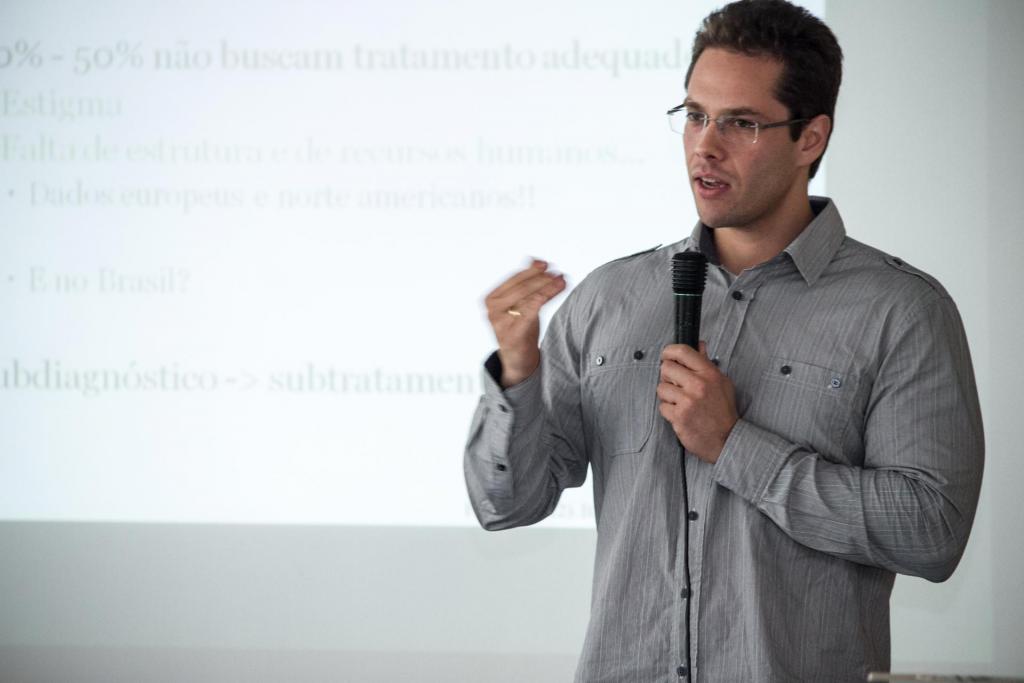
A faculty member at the UFSM Physical Education and Sports Center (CEFD), Felipe Schuch is coordinator of the Research Group on Exercise and Mental Health (Gepesm) at UFSM. In addition, he serves as an advisor in the graduate programs in Movement Sciences and Rehabilitation at UFSM and in Psychiatry and Mental Health at the Federal University of Rio de Janeiro (UFRJ). He serves on two task forces: one for the World Federation of Societies of Biological Psychiatry, focusing on lifestyle medicine for depression, and another for the International Society for Bipolar Disorders, focusing on physical exercise and nutrition. For five consecutive years (2020 to 2024), he was listed as one of the most cited authors in the “Psychology and Psychiatry” field on the Clarivate/Web of Science list.
How the survey works
Bori and Overton’s analysis considers public policy documents released between 2019 and July 2025. This includes technical reports, expert opinions, guidelines, clinical guidelines, documents from multilateral organizations, and official materials produced by national and international governments. Each researcher listed has at least 150 citations in strategic documents, indicating direct influence on the development of public policies.
Overton, the database used in the study, tracks millions of documents worldwide and identifies where scientific knowledge is used to guide decisions. “It is not just about measuring academic impact, but real impact: which voices in science are mobilized when decisions must be made regarding health, climate, the economy, or inequality,” states the report.
Felipe Schuch notes that, although he was familiar with other lists, he was unaware of this specific metric. “I kept track of other metrics, but not this one in particular. It’s a great recognition for UFSM and for Brazilian science, because it shows that what we do isn’t irrelevant, but rather something that produces real results.”
Schuch’s work and why he appears on the list
Schuch works in the field that investigates the relationship between physical activity, lifestyle, and mental health. His focus is on understanding how different levels of physical activity influence symptoms, risks, and the progression of disorders such as depression and anxiety.
According to Schuch, some of his most cited studies in public policy documents are:
- A meta-analysis published in 2016, which assesses the effects of physical exercise on depressive symptoms in people with depression;
- A 2018 study demonstrating how physical activity reduces the risk of developing depressive symptoms or disorders;
- A 2022 article in the American Journal of Psychiatry, which calculates the minimum amount of physical activity needed to generate benefits, as well as estimating the dose-response relationship.
This research has informed everything from general exercise recommendations to clinical guidelines and national mental health promotion strategies. “The importance of being on this list,” Schuch reflects, “is to show the impact our work has and how it can influence decisions, behaviors, and policies around the world.”
According to him, impact is measured not only by the number of citations but by the social utility of the knowledge. “This recognition shows that our research is making an impact beyond university walls. What matters most is seeing which documents feature this information and how it drives real social change.”
Ranking among the most influential Brazilian researchers
According to the published list, the professor is credited with 219 citations in public policy documents, stemming from 64 scientific articles. The ranking, led by researchers from the University of São Paulo (USP) and the Federal University of Pelotas (UFPel), shows that Brazilian science has played a fundamental role in the formulation of public policies, albeit unevenly across fields and researcher profiles. Health, the environment, and food account for the majority of the influence.
Professor Felipe Schuch also spoke about his research and projects in an interview with the program Radar Esportivo on UniFM 107.9 radio, which is available at this link.
Text: Marina Brignol, journalism student and News Agency intern
Photos: personal archive
Editing: Lucas Casali
Translation: Amy Graham Lee